China Best Commercial ESS Container Supplier? This question deserves more than a factory ranking. It requires evidence from design, manufacturing, testing, deployment, and after-sales service. A reliable Commercial ESS Container supplier should explain its battery chemistry, thermal management, fire protection, energy management system, and operating limits clearly.
Dr. Imre Gyuk, a respected energy-storage specialist and former U.S. Department of Energy program manager, said, “Energy storage is the key to unlocking the full potential of renewable energy.” His statement reflects the central role of containerized storage. A strong system can smooth solar output, reduce peak-demand charges, support microgrids, and provide backup power during interruptions. Yet, performance depends on site conditions. Temperature, humidity, grid rules, maintenance access, and load patterns all matter.
China has become a major manufacturing base for Commercial ESS Container systems. However, low pricing alone proves little. Buyers should examine cell traceability, battery warranty terms, protection coordination, capacity testing, software visibility, and documented project experience. Ask for operating data from comparable climates and duty cycles. See the installation. Speak with customers.
Details matter. A well-designed container may include liquid cooling, gas detection, emergency ventilation, and separated electrical compartments. These features require correct integration, not just attractive specifications. No supplier is perfect. Some published capacity figures may not reflect usable energy after reserve limits and degradation. That difference deserves careful review.
This guide compares leading Chinese suppliers through practical criteria. It considers technical capability, certifications, production quality, delivery reliability, service response, and long-term value. The best choice is not always the cheapest one. It is the supplier that can prove safe, stable, and maintainable performance.
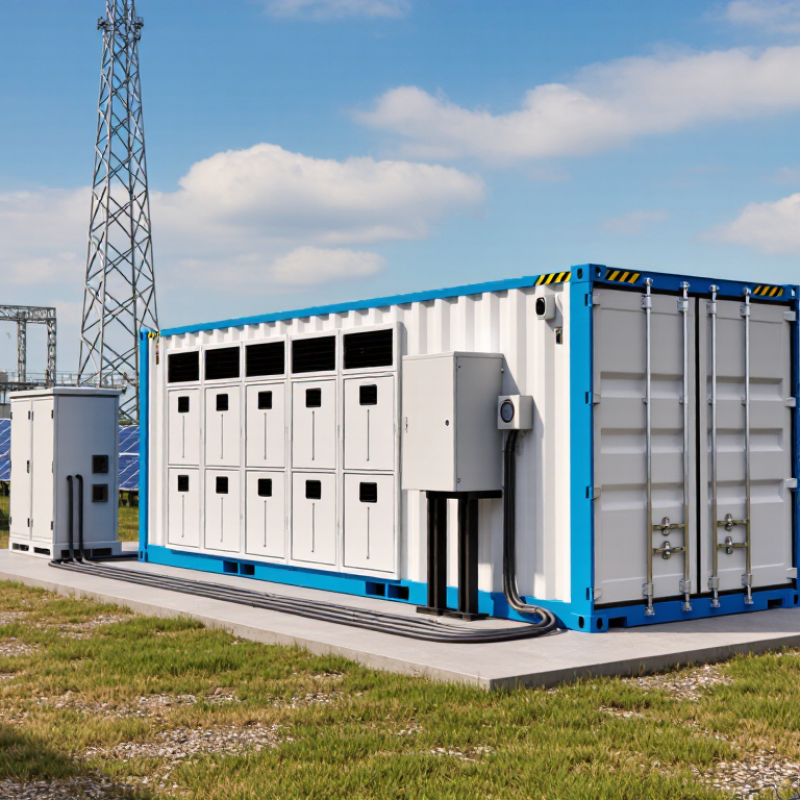
What Is a Commercial ESS Container and How Does It Work?
A commercial ESS container is a steel enclosure filled with battery racks and control equipment. It stores electricity for offices, factories, data centers, and other commercial sites. A typical system includes lithium battery modules, a battery management system, a power conversion system, HVAC equipment, sensors, and fire protection. It may look simple outside. Inside, every cabinet has a specific job.
The working process is practical. During low-demand periods, the container charges from the grid or on-site solar panels. When electricity demand rises, the power conversion system changes stored DC power into usable AC power. The system then supplies selected loads or reduces peak demand. The battery management system watches voltage, temperature, current, and state of charge. If a cell behaves abnormally, it can isolate the affected section and send an alarm. Good installation also requires drainage, ventilation, access space, and scheduled inspections.
Field experience shows that temperature control often matters more than expected. A hot container can lose performance and age faster. A poor cable layout can create maintenance risks. Real projects are less tidy than diagrams. Weather, dust, uneven loads, and changing electricity tariffs all influence results. Some designs also promise more savings than they deliver. Engineers should check local grid rules, fire requirements, warranty conditions, and usable capacity before selecting a container. The best system fits the site, not just the sales brochure.
China Best Commercial ESS Container Supplier? - What Is a Commercial ESS Container and How Does It Work?
| Category | Technical Dimension | Typical Commercial ESS Container Data | How It Works or Why It Matters |
|---|---|---|---|
| Definition | Commercial ESS container | A modular, containerized battery energy storage system generally used for commercial, industrial, utility, or renewable-energy projects. | Battery racks, battery management systems, power conversion equipment, thermal management, protection, and controls are integrated into a weather-resistant enclosure. |
| Container format | Common enclosure size | Standard 20-foot containers are widely used; 40-foot configurations are also available for larger energy capacity. | Standardized dimensions simplify transportation, site planning, lifting, and modular expansion. |
| 20-foot external dimensions | Length × width × height | Approximately 6.06 m × 2.44 m × 2.59 m for a standard-height ISO container before project-specific equipment modifications. | Actual shipping and installation dimensions should be confirmed from the final mechanical drawing. |
| Energy capacity | Usable or nominal energy | Common project ranges are approximately 1–6 MWh per 20-foot container, although the actual value depends on cell format, rack design, usable state-of-charge window, and safety spacing. | Energy capacity determines how long the system can supply a load at a given power level. |
| Power rating | Continuous AC power | Typically about 0.5–3 MW per container or system block, depending on the power conversion system and battery configuration. | Power rating determines the maximum charging or discharging rate and the size of loads the system can support. |
| Battery chemistry | Lithium iron phosphate, commonly called LFP | LFP is widely used in stationary ESS applications because of its thermal stability, cycle capability, and absence of nickel and cobalt in the cathode chemistry. | Chemistry selection affects safety, cost, energy density, operating temperature, and service life. |
| DC voltage range | Battery-side voltage | Many modern systems operate within an approximately 600–1,500 V DC range, depending on the battery rack and power conversion design. | Higher DC voltage can reduce current and cable losses, but requires appropriate insulation, protection, and maintenance procedures. |
| AC grid connection | Low- or medium-voltage interface | Common low-voltage interfaces include 400 V, 480 V, or 690 V AC; medium-voltage connection is typically achieved through a transformer and switchgear. | The connection voltage must match the facility distribution system and local grid-interconnection requirements. |
| Round-trip efficiency | AC-to-AC efficiency | Approximately 85–95% under defined test conditions; actual performance varies with power level, temperature, auxiliary loads, and state of charge. | A higher efficiency reduces energy losses and improves the financial performance of peak shaving, arbitrage, and renewable-energy shifting. |
| Response time | Power response | Power electronics can typically respond within milliseconds to seconds, subject to the control strategy and grid-service requirements. | Fast response enables frequency regulation, power smoothing, backup transition support, and rapid load changes. |
| Duration | Full-power discharge duration | Commercial systems are commonly configured for approximately 1–4 hours, with longer-duration designs available for specific applications. | Duration is calculated by dividing usable energy by discharge power, after considering efficiency and reserve capacity. |
| Cycle life | Expected battery cycling capability | Approximately 4,000–8,000 equivalent full cycles is a common planning range for LFP systems, but guaranteed life depends on depth of discharge, temperature, charge rate, and warranty conditions. | One equivalent full cycle represents cumulative energy throughput equal to one complete charge and discharge of the rated battery capacity. |
| State-of-charge window | Usable operating range | Many projects reserve part of the battery capacity and operate within an approximately 80–95% usable state-of-charge window. | Operating with a reserve can improve degradation management, backup readiness, and system availability. |
| Thermal management | Cooling and heating system | Containerized ESS units commonly use air conditioning or liquid cooling, with heating available for cold climates. | Maintaining the specified temperature range improves safety, usable capacity, charging performance, and battery life. |
| Core control systems | BMS, PCS, and EMS | The battery management system monitors cells; the power conversion system changes DC to AC and AC to DC; the energy management system schedules and dispatches power. | These systems coordinate safe operation, charge and discharge commands, alarms, grid support, and energy optimization. |
| Protection and fire safety | Monitoring and suppression provisions | Typical systems include smoke or off-gas detection, temperature monitoring, emergency shutdown, ventilation, fire detection, and a project-approved suppression method. | Safety design must follow the applicable local fire code, electrical code, installation standard, and authority requirements. |
| Ingress protection | Outdoor enclosure rating | Outdoor ESS enclosures are often specified around IP54–IP55 or higher, depending on the equipment zone and project design. | The selected rating indicates resistance to dust and water ingress; it does not replace proper site drainage and environmental design. |
| Operating temperature | Ambient operating range | A commonly specified range is approximately −20°C to 50°C with thermal management, while performance and power limits may vary outside the preferred range. | Site climate, solar exposure, altitude, humidity, and ventilation must be evaluated during system design. |
| Typical applications | Commercial and industrial use cases | Peak shaving, demand-charge management, time-of-use energy shifting, backup power, solar and wind integration, microgrids, and ancillary grid services. | The best configuration depends on the load profile, electricity tariff, required backup duration, grid rules, and renewable-energy output. |
| Supplier evaluation | Key purchasing criteria | Verified usable capacity, power rating, efficiency, safety documentation, certifications, warranty terms, degradation guarantee, service capability, delivery schedule, and total project cost. | Comparing complete technical and commercial documentation is more reliable than comparing nominal battery capacity alone. |
Note: The figures shown are representative industry ranges for commercial containerized ESS projects. Final values must be verified against the approved datasheet, site conditions, applicable standards, grid requirements, and project-specific calculations.
FAQS
Review load profiles, climate conditions, grid connection, and operating schedules.
Lithium iron phosphate cells are widely used for thermal stability and long service life.
Check whether it balances cells and limits unsafe operating conditions.
The HVAC system should control temperature differences across the container.
Look for smoke, heat, and gas detection together.
Check resistance to rain, dust, corrosion, and unauthorized access.
Request test reports showing round-trip efficiency, usable capacity, degradation, and response time.
Confirm operating limits, response times, performance conditions, and field-fault responsibilities.
A commercial ESS may operate for ten years or longer.
Conclusion
A Commercial ESS Container is an integrated energy storage system that combines battery modules, power conversion equipment, thermal management, fire protection, monitoring, and control systems within a standardized container. It stores electricity when supply is available and releases it when demand rises, helping commercial and industrial users improve energy efficiency, manage peak loads, and support renewable power integration. China is an attractive manufacturing base because of its mature battery supply chain, engineering capacity, scalable production, and ability to customize systems for different climates, grid conditions, and project sizes.
To identify the best supplier, buyers should assess battery quality, system design, energy density, safety architecture, thermal control, intelligent monitoring, and long-term reliability. Cost should be compared together with certification, testing procedures, warranty terms, delivery capability, installation guidance, spare-parts availability, and after-sales support. A dependable supplier should provide transparent technical documentation, clear performance guarantees, responsive communication, and solutions designed for safe, compliant, and efficient operation throughout the system’s service life.